As an Amazon Associate, we earn from qualifying purchases. Some links may be affiliate links at no extra cost to you. Although our opinions are based on curated research, we haven't used these products. Articles generated with AI.


Oil Paint Rendering For Depth And Tone Variation

Oil paint rendering for depth and tone variation involves key techniques like underpainting, glazing, and scumbling. Underpainting establishes a tonal foundation using techniques like grisaille. Glazing adds luminosity through thin, transparent layers, enhancing colors and depth. Scumbling creates texture with dry brushes, revealing underlying tones. Utilizing stippling introduces intricate detail, while strategic layering of warm and cool tones fosters spatial perception. Mastering these methods heightens emotional resonance in artwork, promising a visually compelling experience to the viewer. Learn more about effective applications and techniques.
Key Takeaways
- Employ underpainting techniques to establish a tonal foundation, enhancing depth and form without color distractions.
- Layer warm and cool tones accordingly to create tonal harmony and achieve striking depth in the painting.
- Use glazing to add luminosity with translucent layers, progressively building depth and enhancing tonal variations.
- Implement scumbling and stippling techniques to introduce texture and intricate details, enriching the artwork’s character.
- Utilize atmospheric perspective and light dynamics to enhance spatial illusion and viewer engagement through effective color and shadow management.
Understanding Underpainting Techniques
You may be interested

Accessory Review: Dual 20w Speakers And Enclosures
October 29, 2025

Adding Crew Figures And Stowage For Authentic Looks
October 29, 2025

Are RC Tanks Safe For Kids? Age Ratings And Supervision
October 29, 2025
When an artist begins the journey of oil painting, underpainting serves as an essential initial step that lays the groundwork for a successful piece. underpainting is the practice of establishing a tonal and structural foundation, guiding the artist in subsequent layers and enhancing depth and form. One popular technique is monochromatic underpainting, which utilizes a single hue, like burnt umber, to map values effectively. This approach allows the artist to focus on contrasts without the distraction of color, thereby influencing the emotional depth of the painting. Additionally, techniques like grisaille and verdiaccio offer unique styles that further impact the final piece. By mastering these methods, artists can create inviting, harmonious works that truly resonate with viewers.
Mastering Scumbling for Complexity
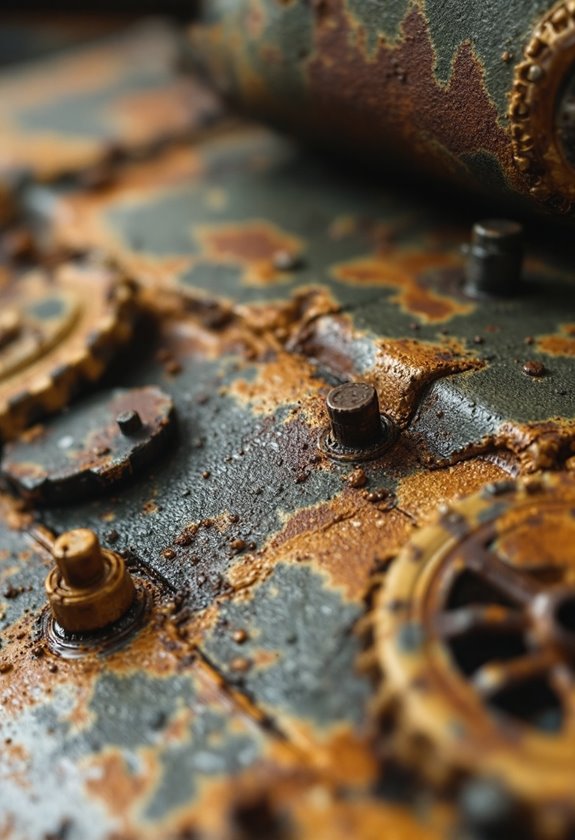
Mastering the art of scumbling transforms ordinary oil paintings into rich, dynamic pieces that captivate viewers. Scumbling techniques involve applying lighter-colored paint with a dry brush, creating textured layers that reveal underlying colors. This texture application enhances depth, making natural elements like clouds and foliage come alive.
To achieve this, artists should use stiff, half-dry oil paints and maintain a controlled brush load. Applying scumbling with varied strokes adds character—avoiding a manufactured look.
Scumbling effectively softens color shifts, breaking up monotonous areas and injecting visual interest. This method reinvigorates sections, preventing flatness and giving the artwork a vibrant, spontaneous feel. Embracing scumbling invites artists to explore new dimensions of creativity, inviting viewers into the artwork’s intricate world. Additionally, incorporating durable materials can enhance the longevity of the painting process and preserve the artwork’s quality over time.
The Art of Glazing for Luminosity

The art of glazing for luminosity opens a world of possibilities for oil painters seeking to infuse their work with depth and vibrancy. Glazing involves applying thin, translucent layers of paint, enhanced by glazing mediums, over a fully dried base. This technique allows color transparency to shine through, enriching the painting with stunning tonal variations.
To achieve ideal results, artists should:
- Use transparent or semi-transparent paints, diluted with a glazing medium.
- Apply multiple thin layers gradually to build depth.
- Experiment with alternating warm and cool glazes for nuanced atmospheric effects.
Incorporating techniques from other artistic disciplines, like battery life management in RC tanks, can inspire new approaches to maintaining a vibrant palette.
Recommended Products

Create lush impastos, glazes while improving flow and sheen

Premium Alkyd Resin Formula - Crafted with high-quality alkyd resins to provide reliable fast-drying performance while maintaining excellent workability.

Cobra Water Mixable Oil Glazing Medium - 75 ml, Bottle
Utilizing Stippling for Detail

Stippling bursts onto the canvas as an extraordinary technique for adding intricate detail and depth in oil painting. This method involves applying numerous small dots of paint, allowing artists to create stunning tonal variation through stippling applications. Adjusting dot density is key—closer dots yield darker shades, while spaced dots produce lighter, more reflective areas.
Artists often use brushes with stiff bristles or stippling sponges, applying paint with rapid tapping motions. For deeper tones, thicker dots can be used, enhancing the three-dimensional effect. This careful, deliberate approach provides incredible control over light and shadow, making stippling ideal for detailing complex subjects like skin or foliage. Embracing stippling encourages a distinctive, textured quality in one’s artwork, enhancing visual allure. Additionally, the realistic sound effects achieved through various techniques can add an immersive dimension to the artwork, similar to how they enhance the gameplay experience in RC tanks.
Recommended Products

Contents: set of 3 brushes.
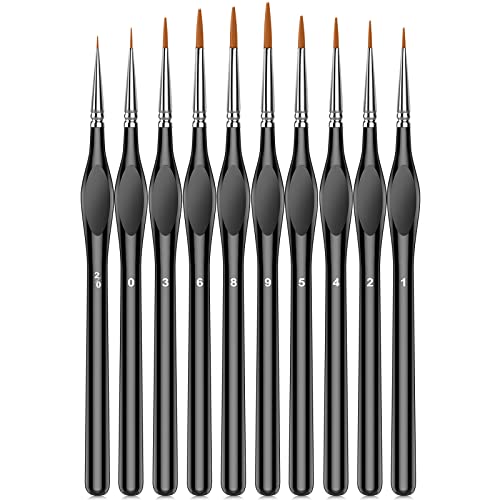
Model paint brushes: 10 Different Sizes ( 0/2, 1, 2, 3, 4, 5, 6, 8, 9); Length: 18 cm to 19.8 cm (7 to 7.8 inches). Brushes shape and number stamped on to help budding artists select the right brush. Tiny tip paint brushes allow you to do fine detailing and art painting, precisely reaching tight tiny points. Whether you're a beginner, hobbyist or a professional, these brushes will help you make excellent work of art.

Contents: set of 3 brushes.
Innovative Subtraction Methods in Oil Painting

Innovative subtraction methods in oil painting offer artists a dynamic way to refine their work, enhancing both texture and depth. By employing experimental techniques such as using solvents, artists can selectively remove paint, revealing underlayers for highlights and corrections. Tools like Q-tips and rubber nibs allow precise removal, ensuring detailed control without damaging the surface.
Subtractive processes enable exposure of a monochromatic underpainting, allowing tones to emerge through glazes, fostering subtle variations. Physical removal techniques, such as scraping wet paint, create rich textures and simulate natural effects, while also allowing corrections early in the painting process. These methods not only enrich overall visual complexity but also support a vibrant dialogue between layers, inviting artists to explore their creativity with confidence. Additionally, understanding shooting accuracy and range can enhance an artist’s ability to convey depth and tone in their work.
Recommended Products

Soft LDPE Plastic Bottle

Lightweight & Portable: Pack of 40 plastic dispensing bottles. Holds 30 ml or approximately 1 Oz. The squeeze bottle size is 4.1x1.1in.

Precision Needle Tip - The Atdcoek applicator bottle features a precision needle tip, ideal for detailed work in crafts, painting, and other applications requiring fine control; Include 2 types of needle tips: 18G & 21G
Achieving Tonal Blending for Realism
Achieving a convincing sense of realism in oil painting demands skillful tonal blending, a technique that connects the gap between the vibrancy of colors and the depth of shadows. To guarantee technique benefits, artists should begin with high-quality brushes, such as a #4 filbert or a #12 mop, which facilitate blend consistency. Utilizing feathering, artists can create soft shifts by lightly dragging dry brushes over edges. It’s crucial to blend while the paint remains wet, using a gentle touch to maintain clarity. Introducing intermediate mid-tones helps ease the change between contrasting colors. This method not only aids in achieving gradual tonal variations but also enhances the overall depth, allowing for more lifelike representations on canvas. Additionally, artists can draw inspiration from RC tank modifications to explore creative approaches and enhance their techniques.
Layering Warm and Cool Tones
Layering warm and cool tones is essential for oil painters aiming to create depth and form in their artwork, as it allows for a dynamic representation of light and shadow. By alternating between warm and cool layers, artists achieve a warm cool balance that enhances tonal harmony. For instance, in highlighting areas, cool tones typically represent the lightest values, while shadows utilize warmer tones for richness. Gradual shifts, where light meets shadow, should also incorporate cooler tones for realism. This layering technique not only defines realistic forms but also enriches the visual experience. Ultimately, mastering the relationship between warm and cool tones can lead to striking depth and a more vibrant painting, inviting viewers to appreciate the subtleties of light and color. Additionally, using aesthetic enhancements in your artwork can further elevate the overall visual impact and appeal.
Contrasting Values for Depth
When an artist seeks to convey depth and dimension in their oil paintings, contrasting values serve as a foundational element that can transform a flat image into a dynamic piece of art. By mastering tonal relationships, artists can create value harmony, enhancing visual interest. Dominant dark values complement lighter shapes, allowing them to pop, which is essential for developing a clear focal point. To achieve effective depth, it’s recommended to simplify the value range to five distinct tones or fewer. This approach fosters clarity and impactful designs. Additionally, contrasting warm highlights with cool shadows amplifies dimensionality. Ultimately, thoughtful adjustments to value contrasts guarantee that compositions resonate deeply, inviting viewers into the artwork’s spatial harmony and emotional landscape.
Background Techniques for Atmospheric Perspective
Creating an enchanting background in oil painting requires artists to understand and implement techniques that enhance the illusion of depth. To cultivate color harmony, painters should introduce cooler hues, like soft blues and grays, for distant objects, while adding muted purples in mid-ground layers to create smooth shifts.
Incorporating softer edges and simplified textures helps keep background details less defined, maximizing depth cues. Artists can use glazing and scumbling to apply thin layers that unify colors and simulate atmospheric haze. This approach allows for more light diffusion, enhancing the ethereal quality of the painting. By adjusting value ranges and ensuring that warmer foreground elements contrast with cooler backgrounds, artists achieve a harmonious composition that draws viewers into the scene.
Exploring Light and Shadow Dynamics
Understanding the dynamics of light and shadow is essential for any oil painter aiming to breathe life into their compositions. The interplay of light and shadow creates depth and engages the viewer. Oil painters can achieve this by using transparent glazes for shadows, enhancing their clarity while preventing a chalky appearance.
Opaque highlights, built up with thick impasto, create a striking contrast that draws attention. Artists should focus on the nuances of shadows, softening edges to make shifts smoother and more natural. Utilizing a single light source simplifies the observed effects, while experimenting with multiple sources can add vibrancy. By mastering these techniques, artists can simulate natural light behavior, ultimately enhancing the three-dimensionality of their artwork.
Color Dynamics for Spatial Perception
How can the strategic use of color dynamics elevate spatial perception in oil paintings? By understanding color psychology, artists can create spatial illusions that enhance depth. Warm colors, like reds and oranges, tend to advance, inducing closeness, whereas cool colors, such as blues and greens, recede, suggesting distance. This interaction allows for a layered, three-dimensional effect when artistically juxtaposed.
Moreover, color relativity plays a crucial role; colors shift their appearance depending on surrounding hues and light, which can be exploited to perfect spatial cues. For instance, a warm yellow against a cool blue can amplify the viewer’s perception of depth. Emphasizing this interplay not only engages the audience but also deepens their connection with the artwork.
Practical Workflow for Depth and Tone Development
Achieving depth and tone in oil painting requires a methodical approach that combines foundational techniques with a keen eye for color dynamics. The workflow begins by establishing a tonal foundation using dark values and shadows, creating structural integrity. After that, artists can employ underpainting to outline initial forms and values. Progressive layering introduces color harmony; transparent layers build richness without muddiness. To achieve tonal depth, neutralize colors through tints, tones, and shades, ensuring foreground elements are saturated while backgrounds remain subdued. Finally, blending techniques create seamless shifts for realistic depth. By following this workflow, artists can effectively manipulate spatial cues, enhancing their work’s emotional resonance and immersive quality, ultimately crafting visually enthralling oil paintings.
Recommended Products
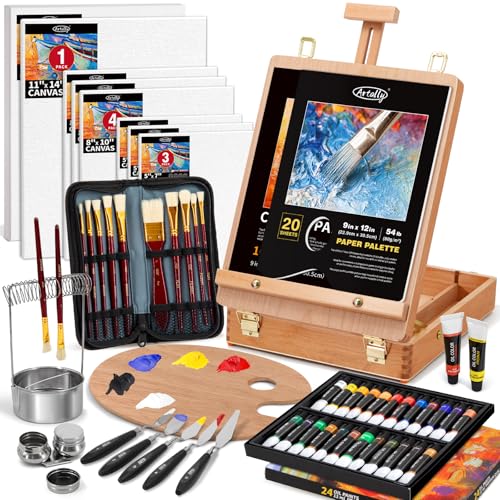
【All-in-One Oil Painting Kit - 82 Pieces Included】Unleash your creativity with this comprehensive ARTALLY Oil Painting Set. Everything you need to start your creative journey. This complete set features a sturdy beechwood easel box, 24 vibrant oil colors, 8 canvas boards, 1 big stretched canvas, and a 10-page canvas paper pad, 10 hog hair oil brushes with storage case, 5 painting knives(wooden handle), 2 metal oil cans, and 1 versatile brush holder/cleaner. 1 oval wooden palette and a 20-page Tear-Off paper palette. Perfect for artists of all levels !

This set contains 20 essential starter colors for beginners, made from quality fine art pigments. It offers excellent retention of brush and palette knife strokes due to its stiff consistency compared to other ranges. Best used in combination with fine art solvents, mediums and oils from the Winsor & Newton additive range.

【40 Rich & Vibrant Oil Based Colors】Magicfly Professional Oil Paint Set contains 40 unique colors (primary colors, metallic gold & silver). Plus we provides 2 more white color tubes than other normal paint sets, satisfying your infinite imagination.
Frequently Asked Questions
How Do I Choose the Right Brushes for Depth Rendering?
To choose suitable brushes for depth rendering, one should consider brush types like hog bristle for texture and synthetic blends for smoothness. Employ various brush techniques to achieve desired tonal variations and enhance artistic expression.
What Mediums Can Enhance My Oil Painting Depth?
Medium choices like linseed oil and glazing techniques create visual depth in paintings. These tools enable artists to blend colors seamlessly, enriching their artwork’s luminosity and inviting viewers into a shared appreciation of depth and tonal beauty.
How Can I Fix Mistakes in Layered Oil Paintings?
To fix mistakes in layered oil paintings, one must focus on mistake correction, prepare surfaces properly, apply titanium white for color adjustments, and adhere to fat over lean principles for ideal results and lasting beauty.
What Are the Best Canvas Types for Achieving Depth?
To achieve depth, artists often favor linen for its refined canvas textures and durability, while cotton duck provides versatility. Proper priming enhances depth techniques, ensuring vibrant tonal contrasts and rich visual effects in their artwork.
How Do Environmental Factors Affect Oil Paint Drying Times?
Environmental factors profoundly shape oil paint drying times; humidity effects linger like fog, while temperature impact dances like sunlight. Together, these elements sculpt the artist’s journey, creating an emotional tapestry of patience and anticipation on the canvas.


