As an Amazon Associate, we earn from qualifying purchases. Some links may be affiliate links at no extra cost to you. Although our opinions are based on curated research, we haven't used these products. Articles generated with AI.


Daily Post-Drive Checks For RC Tank Reliability

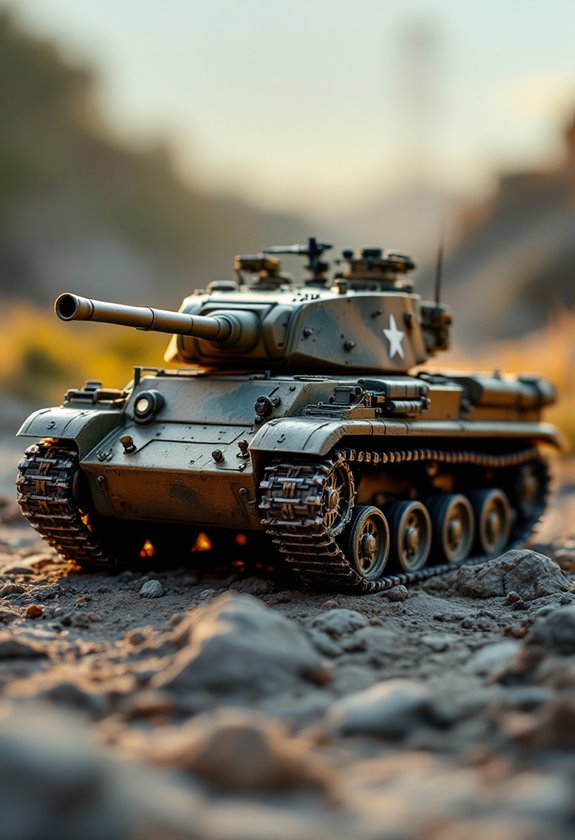
Daily post-drive checks for RC tank reliability are essential for maintaining performance. Begin by cleaning the exterior, removing dirt with a soft brush. Next, inspect tracks for wear, looking for cracks and loose components. Adjust track tension to avoid sagging and guarantee proper alignment. Check suspension components for cracks and leaks. Lubricate moving parts with appropriate greases. Finally, conduct functional tests on movement and control responsiveness. These steps enhance reliability and extend tank lifespan, promising a smoother ride ahead.
Key Takeaways
- Inspect the exterior for dirt, debris, and ensure all components are clean and functioning properly.
- Check tracks for wear, ensuring no visible cracks or damages that may affect performance.
- Assess suspension components for visible cracks, bends, or leaks to maintain structural integrity.
- Monitor battery performance by measuring voltage and ensuring connections are secure for reliability.
- Test all movement functions, including turret rotation and drive motor performance, for smooth operation post-drive.
Cleaning the Exterior
You may be interested


Cleaning the exterior of RC tanks is essential for maintaining their performance and extending their lifespan. To enhance the exterior aesthetics, enthusiasts recommend using a soft brush or paintbrush to gently remove dirt and debris. For those tough spots, biodegradable degreasers can effectively break down grease—applying it for about ten minutes before rinsing helps uplift grime. A careful rinse with water prevents saturation of delicate electronics. Importantly, avoid harsh cleaning products like bleach that can damage plastics. After drying, it’s beneficial to apply PTFE-based lubricants to keep moving parts functioning smoothly while protecting against water exposure. Additionally, investing in high-quality protective equipment not only preserves the tank’s look but also fosters a strong sense of belonging within the RC community dedicated to maintaining their prized models.
Inspecting Tracks for Wear

Inspecting tracks for wear is a critical process that can greatly impact the performance and longevity of RC tanks. Careful track link inspection guarantees that any visible cracks, chips, or bends are identified early, preventing failure. Enthusiasts should conduct a wear pattern analysis, measuring link widths and pin hole diameters to detect elongation or stretching that indicates wear. Inspect rivets and pads for looseness or excessive wear, which could lead to track separation. It’s important to evaluate the entire surface for debris and corrosion, as these can accelerate deterioration. By regularly monitoring track conditions, users can maintain peak performance and extend the life of their RC tanks, ensuring they remain reliable companions on all terrains. Additionally, utilizing a track repair kit can provide essential components for maintaining and repairing tank tracks effectively.
Recommended Products

【1/16 Scale Model Tank】Russian t-90 rc tank features infrared battle function, smoke, sound, lights, simulated recoil, firing bbs, forward, backward, right and left spin, 360 degrees central rotation, turret 320 degrees rotation, muzzle up and down 30 degrees , 40 degrees climbing slope. Turret rotating speed can be adjusted. Sound can be adjusted up, down, and turned off.

【1/16 Full Scale Model Tank】Tiger I rc tank features infrared battle function, smoke, sound, lights, simulated recoil, firing 6mm bbs, forward, backward, right and left spin, 360 degrees central rotation, turret 320 degrees rotation, muzzle up and down 30 degrees , 40 degrees climbing slope. Tank forward, backward, turret rotating speed can be adjusted. Sound can be adjusted up, down, and turned off.
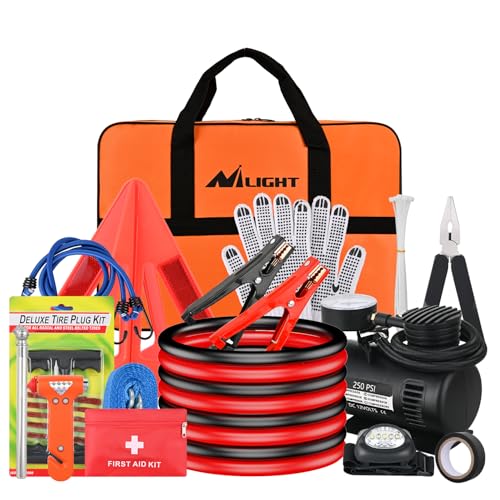
Essential Roadside Emergency Kit: Our all-in-one car safety kit contains accessories such as jumper cable, air compressor, tire repair kit, tire pressure gauge, tow rope, safety hammer, multi-purpose pliers, first aid kit and more, ensuring you're prepared for any emergency roadside crisis
Adjusting Track Tension

Adjusting track tension on an RC tank is a pivotal aspect of maintaining ideal performance and preventing operational issues. Proper track maintenance guarantees that the tank can navigate smoothly without derailing.
1. Identify the Tension Method: Most models, like Heng Long, adjust tension using the idler wheel arm. Newer models may provide a hex tool for easy adjustments.
2. Adjusting Steps: For ideal tension:
- Achieve slight tension, reducing sag over return rollers.
- Test drive the tank, making iterative adjustments.
3. Common Issues: Watch for tight tracks, which stress the drivetrain, or loose tracks, which can derail.
4. Visual Check: Verify the track tooth aligns with the top of the second road wheel for accurate tension. Additionally, ensuring that your tank can handle steep inclines up to 40 degrees can enhance its versatility on varied terrains.
These essential tension adjustments foster a reliable, enjoyable RC tank experience.
Recommended Products

【One Screen, Dual Use】:Full-color, 4.3 inch touchscreen, sroll handy whitout lag. Easily navigate menus and customize screen background colors to your preference. The Screen also can be use as FPV display when connected 5.8G image transmission system.


🏆【Compatibility】This RC tool kit is compatible with 1/8 1/10 1/12 1/16 1/18 Scale Brands RC Trucks Crawler Buggies, Such as Redcat Arrma Axial HSP HPI RC4WD Tamiya Kyosho Globact WLtoys RC car, etc.
Checking Suspension Components

Ensuring a robust suspension system is essential for the overall performance and longevity of any RC tank. Regular checks of suspension components help enthusiasts maintain superior reliability. Start by inspecting suspension arms for visible cracks or bends—these can lead to structural failure. Examine shock absorbers for leaks and damaged seals, critical for effective damping performance. Springs should be assessed for fatigue, ensuring proper ride height.
An important part of this process is suspension alignment. Correct alignment enhances handling. For tuning adjustments, verify that screws and mounts are tightly secured without being over-tightened. Finally, keep an eye on torsion bars for damage. Following these detailed steps not only enhances the tank’s performance but also fosters a sense of community among dedicated RC tank aficionados.
Lubricating Moving Parts

Lubricating moving parts greatly contributes to the excellent performance and lifespan of RC tanks. Proper lubrication methods are crucial for maintaining peak functionality, with specific grease types recommended for different components. For gears and differentials, white lithium grease is perfect due to its cling and protection against wear. Light oils, between 100,000 to 200,000 weight, work well for bushings and center diffs, reducing friction effectively. Additionally, silicone sprays prevent rust while avoiding dirt attraction.
To apply lubricants, use a paper towel or cotton swab, placing small amounts precisely where needed. After lubrication, run the motors briefly to distribute grease evenly. Regular inspections are essential; verify the components are clean and check for thin or dirty lubricant, reapplying as necessary to avoid over-lubrication. Incorporating oil filter kits can further enhance engine longevity and performance, ensuring optimal operation over time.
Recommended Products

Includes zinc additive for a clean, white color

CRC INDUSTRIES: A market leader that offers impeccably designed chemical solutions to maintain, protect and repair different marine, heavy-duty motor vehicles, industrial-grade engines, household tools and electrical equipment.
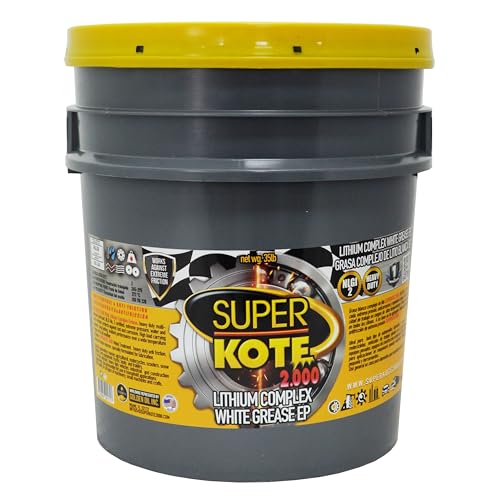
NLGI 2 GC-LB certified. High-quality, multi-purpose lithium complex grease.
Battery Charging Guidelines
After ensuring all moving parts are well-lubricated for ideal performance, the next essential step in the maintenance of RC tanks involves understanding battery charging guidelines. Proper charging rates, typically set at 1C, should match the battery capacity, such as charging a 1500mAh battery at 1.5A. Charging above this can shorten lifespan and heighten risks. Meanwhile, voltage limits are critical; LiPo cells should ideally charge to 4.20 volts. To safeguard against overcharging, using smart chargers helps detect voltage levels and chemistry. Users should monitor cells for balance and inspect connectors, prioritizing safety by avoiding charging unattended. Following these guidelines not only enhances battery longevity but also strengthens the community of RC enthusiasts committed to safe practices. Additionally, ensuring the battery specifications, such as capacity measured in mAh, align with your RC tank’s requirements is crucial for optimal performance.
Recommended Products

High-Efficiency Charging: With a total output power of 500W, the charger automatically distributes power per channel, optimizing allocation based on the battery’s requirements.
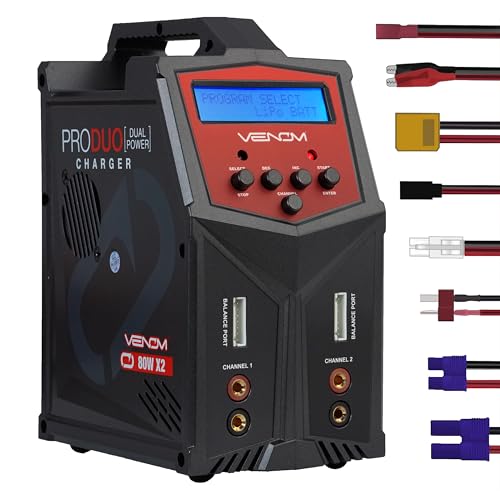
Efficient RC Charger - With 2 charging ports, our RC battery charger lets you charge 2 batteries at the same time. It features two 80W independent charging circuits for a total of 160W of power.

Dual Battery Charger--The Dual RC Battery Charger has larger power--AC input max power 200W(CH1+CH2=200W), 100-240V; DC input max power 400W(CH1+CH2=400W), 11-18V; charge current:( 0.1-12A)*2; discharge power: 10W*2; discharge current:( 0.1-2A)*2, which can charge your battery faster and more safety. Our charger's shell is made of fire-proof material.
Battery Storage Best Practices
When it comes to battery storage, enthusiasts in the RC community frequently overlook essential best practices that can importantly extend the lifespan of their batteries and enhance safety. To achieve ideal storage, keep LiPo batteries at approximately 40% to 60% charge, ensuring they are stored in a cool environment, ideally between 10°C to 25°C. Use fireproof cases or LiPo-safe bags for secure storage, and always keep batteries out of reach of children. Monitor battery voltage levels every few months to prevent deep discharge, and never leave batteries inside the RC tank to mitigate damage risks. Following these guidelines will not only maximize battery lifespan but also foster a culture of responsible RC enjoyment among enthusiasts. Additionally, consider using rechargeable lithium-ion batteries for extended use and quick charging capabilities.
Inspecting Electrical Connections
Inspecting electrical connections is essential for any RC tank enthusiast, ensuring both safety and performance are at their peak. Begin with a thorough visual inspection, checking for signs of corrosion, which can threaten conductivity and overall function. Inspect connector seating by gently moving connectors; they should remain firm without any play. Look out for exposed wires or damaged insulation, as these can lead to short circuits.
Verify proper labeling of connectors, aiding in future troubleshooting. Follow relevant electrical codes for wiring methods, ensuring durability and safety. Remember to regularly document your findings and schedule cleaning sessions to enhance corrosion prevention. By making these checks part of your routine, you contribute to the longevity and reliability of your RC tank.
Recommended Products

Ultra Brightness: Each work light use 28PCS high quality 5W Osram led chips, total 140 watts, outputs super bright 15560LM light to illuminate the entire road ahead, 596Meter@1LUX, 10Meter@3560LUX. Features a trusted, amazing, and long-lasting brightness without performance failure

Ultra Brightness: With 100% LED technology, our R&D team uses professional optical light distribution solutions--using 27 PCS HL2X / 5W LED chips with 1 PC 5050 25W high-power LED chip to maximize the effectiveness of each LED chip, featuring a trusted ultra-bright, high-intensity, stable light output, 700% brighter than the original halogen light

Ultra Brightness:Each work light use 12PCS high quality led chips, outputs super bright 6000K cool white to illuminate the entire road ahead. Features a trusted, amazing, and long-lasting brightness without performance failure. No dark spots or shadow areas, no blinding or glare to oncoming drivers, avoiding scattered light problem to ensure safety
Monitoring Battery Performance
Monitoring battery performance is essential for optimizing the functionality and longevity of RC tanks. This process involves regularly evaluating battery efficiency through voltage measurement. For instance, users should measure battery voltage both under load and at rest to identify any abnormal drops that may indicate capacity loss or connection issues. Implementing shunt-based battery monitors offers a more accurate state of charge (SOC) by tracking current flow, especially in lithium batteries, which have predictable characteristics. Additionally, labeling the installation date and monitoring parameters helps guarantee consistent adjustments over time. By maintaining an organized battery management system, enthusiasts can enjoy reliable operations, therefore fostering a sense of community among RC tank hobbyists who prioritize performance and safety together.
Fastener Tightness Check
Ensuring tightness of fasteners is essential for the reliability and safety of RC tanks, as even small lapses can lead to mechanical failures during operation. Conducting thorough fastener inspections is crucial. Start with the First Movement Test: mark each fastener and apply force to check for original torque. The Loosening Test approximates this torque by measuring the force needed to break loose a fastener. Additionally, the Marking Test confirms torque consistency upon retightening by aligning marked surfaces. Regular torque verification not only meets ISO 9001 quality standards but also enhances overall performance. Using blue thread locker can greatly prevent fastener loosening from vibrations, ensuring a secure and enjoyable RC tank experience. Always remember, a well-maintained tank is a dependable tank!
Structural Integrity Assessment
Structural integrity assessments play an essential role in maintaining the performance and reliability of RC tanks. These assessments guarantee the tanks remain safe and functional through routine examinations.
- Visual Structural Inspection: Inspect external and internal components for cracks or corrosion. Using drones can enhance safety and reach inaccessible areas.
- Ultrasonic Thickness Measurement: Measure wall thickness to detect thinning material or internal corrosion, taking at least five readings per plate.
- Non-Destructive Testing (NDT): Using methods like Ultrasonic Pulse Echo, discover hidden defects without causing downtime.
- Deformation and Buckling Assessment: Employ 3D scanning techniques to identify any deformation beyond acceptable limits.
Functional Testing After Use
Functional testing after use is an essential step in the maintenance routine of RC tanks, designed to verify the full operational capability of the vehicle. This process begins by evaluating movement stability: testing forward, backward, and turning functions guarantees peak responsiveness. The turret should rotate smoothly for 360-degree movement, while the main gun’s elevation and firing mechanisms need checks for consistent functionality.
Further, monitoring signal reception is imperative. Intermittent signal interference can affect control, necessitating thorough checks on wireless communication modules and sensor accuracy. Additionally, testing the infrared battle system with specialized remotes confirms reliable action without reliance on reflective surfaces, enhancing battle readiness. By following these steps, users can verify their RC tank operates effectively and reliably in future engagements.
Observing Drive Motor Performance
Observing drive motor performance is vital for guaranteeing the longevity and efficiency of RC tanks. Monitoring motor performance starts with measuring torque, as well as speed, under various conditions. For instance, a 27-turn motor can reach temperatures exceeding 200°C, indicating potential overheating, while higher torque motors, like a 35t, generally perform better under load. Regularly measuring RPMs reveals how configurations affect speed; testing showed 96 RPM without added magnets and an impressive 114 RPM with them. Additionally, understanding current draw is essential; unloaded motors draw around 0.1 A, but at full load, this can rocket to 1.2 A or more. Implementing these checks guarantees peak performance and reliable operation of your RC tank, fostering a sense of achievement and belonging among enthusiasts.
Verifying Radio Control Responsiveness
Verifying radio control responsiveness is an essential step in ensuring optimal performance for RC tanks, enhancing both user experience and operational efficiency. This involves checking signal strength indicators on both transmitter and receiver to confirm a strong connection. Enthusiasts should perform a range test in typical operational environments to assess responsiveness, ensuring no dead zones disrupt control. Additionally, a latency assessment is necessary; users should test input commands for immediate execution without lag, observing the tank’s movements for any erratic behavior. Regular inspection of batteries, connectors, and internal wiring will help maintain peak performance. Finally, confirming frequency settings can prevent interference, ensuring smooth operations. Engaging in these checks fosters a strong community commitment to reliability and enjoyment in the hobby.
Logging Maintenance Actions
Logging maintenance actions is a pivotal practice that enhances the longevity and reliability of RC tanks, ensuring that each component functions effectively. By creating thorough maintenance documentation, hobbyists benefit from systematic records of actions taken, such as cleaning, lubrication, or parts replacement. This log consistency helps track maintenance frequency, making it easy to identify recurring issues and plan preventative measures to avoid unexpected failures.
Important details to record include the date and time of each session, a description of tasks completed, and the condition of serviced parts. Digital tools or dedicated notebooks can streamline this process, allowing for immediate entry after inspections. Ultimately, a well-maintained log supports warranty claims and sharpens performance evaluations, uniting the RC community through shared knowledge and experience.
Frequently Asked Questions
How Often Should I Clean My RC Tank?
Cleaning frequency for an RC tank should ideally occur after each outdoor use. A maintenance schedule that includes biannual deep inspections will guarantee peak performance, particularly when subjected to harsher environments or intensive usage.
Can I Use Water to Clean My RC Tank?
When it comes to using water for cleaning an RC tank, one need not worry much; effective cleaning techniques can mitigate water damage risks. However, proper drying and caution with components remain instrumental in preserving tank longevity.
What Type of Lubricant Is Best for RC Tanks?
For RC tanks, white lithium grease and silicone-based lubricants are ideal choices. Proper oil application guarantees smooth operation while preventing wear, fostering a sense of belonging within the community of avid RC enthusiasts who prioritize reliable performance.
How Can I Tell if My Battery Needs Replacing?
To determine if a battery needs replacing, observe its lifespan and charging practices. Swelling, inconsistent performance, and abnormal charging times suggest deterioration, indicating it may be time to invest in a new battery for reliable operation.
What Tools Do I Need for RC Tank Maintenance?
A well-equipped toolbox glimmers like a treasure trove of potential, filled with repair tools essential for an effective maintenance routine. Precision drivers, pliers, and lubricants guarantee every RC tank runs smoothly, nurturing a dedicated enthusiast’s journey.